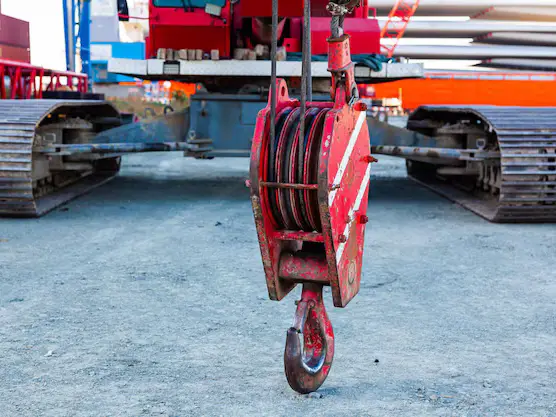
Complete Guide to Crawler Crane Hook Block
Without a doubt, the hook block is the most important connection between the crawler crane and the load. No matter whether you are moving huge precast concrete pieces on a construction project, loading and unloading equipment parts, or performing lifts under extreme outdoor conditions, the crane hook block will have to carry all the loads. For operators, maintenance professionals, and crane fleet managers, knowledge about different types of crane hook blocks, the components of crane hook blocks, and correct crane hook block assembly is crucial to successful operations.
In this detailed guide, we will explore different types of crawler crane hook blocks, their components, sheaves, assembly techniques, twisting issues, and safety norms.
Crawler Crane Hook Block Types
1. By Number of Sheaves (Pulleys)
| Type | Description | Application |
| Single-Sheave Hook Block | One pulley, simple & lightweight | Light lifts, single-line reeving |
| Multi-Sheave Hook Block | 2, 4, 6, or 8 sheaves | Heavy lifts, mechanical advantage via reeving |
2. By Hook Shape / Number of Hooks
| Type | Features | Typical Use |
| Single Hook | Standard forged hook, easy to rig | General purpose, most common |
| Double Hook | Symmetrical two-hook design | Extra-large loads, better load distribution |
| C Hook | Open, C shaped profile | Handling coils, marine containers |
3. By Manufacturing Process
| Type | Characteristics |
| Forged Hook Block | Single-piece forged steel – highest strength, compact size |
| Laminated (Plate Style) Hook Block | Stacked steel plates bolted together – extreme safety (won’t fail if one plate cracks), heavier |
4. By Rotation Function
| Type | Description |
| Swivel Hook Block | Hook rotates 360° – allows load orientation without crane movement |
| Non Swivel / Fixed Hook Block | Hook fixed – provides a stable, non rotating connection |
5. By the Reeving (Rope Threading) Method
| Type | Effect on Crane Performance |
| Single Part Line | High line speed, low lifting capacity |
| Multiple Part Line (e.g. 2, 4, 6, 8 parts) | Lower speed, multiplied lifting capacity |
| Equalized Reeving | Balanced rope tension across sheaves |
Crawler Crane Hook Block Parts
Hook
The hook forms the first link in the chain of the loading system. In crawler cranes, the hooks are made of high-strength alloy steel, usually chromium-molybdenum or nickel alloy steel, which offers good tensile strength and fatigue resistance for handling heavy dynamic loads.
Sheaves (Pulleys)
Crane hook block sheaves are grooved wheels mounted on bearings that guide the wire rope through the block. The number of sheaves determines the mechanical advantage: each sheave effectively doubles the rope’s lifting capacity when correctly reeved.
Side Plates (Cheek Plates)
The side plates form the structural housing of the hook block, enclosing the sheaves and supporting the central shaft. Crawler crane hook blocks feature high-impact-resistant side plates that withstand the dynamic stresses of heavy lifting.
Hook Block Frame and Shaft
The frame holds all components together and bears the load path from the sheaves to the hook. Some designs incorporate extended portions with holes for fast reeving mechanisms. Recent innovations include modular frame designs that allow users to replace hooks of different tonnages depending on working conditions quickly.
Bearings and Lubrication
Lubricating bearings effectively is essential. According to industry best practices, bearings should be cleaned and have their grease changed on a quarterly basis, using molybdenum disulfide lithium grease. Self-aligning sealed bearings provide better dust and moisture protection.
Safety Latches and Anti-Fall Devices
Modern hook blocks used in crawler cranes have safety systems that include locks for the latches that secure the hooks, as well as anti-fall equipment that prevents the accidental drop of loads.
Crawler Crane Hook Block Sheaves
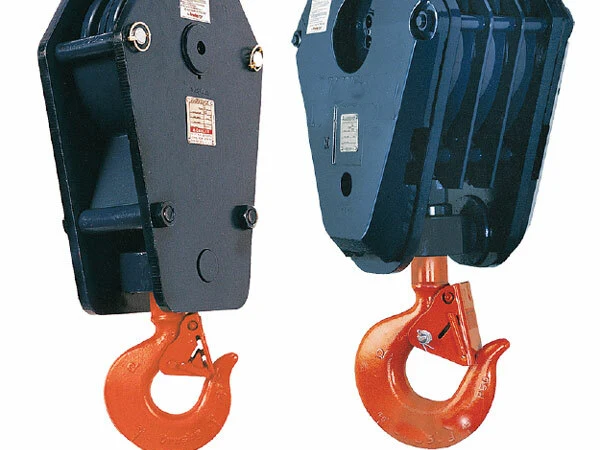
The number and position of crane hook block sheaves are the main factors affecting the performance of crawler cranes. Sheave positioning should be compatible with wire rope size, load weight, and operational purposes.
Single sheave blocks
Single sheave blocks are suitable for straightforward lifts with a single part of the line. Category types include single, double, triple, or quadruple sheave blocks, which can be combined to increase pulling or lifting capacity.
Multi-sheave block
The area where the use of the crawler crane is best suited is multi-sheave blocks. As an illustration, in a Manitowoc MLC300 crawler crane, there are blocks that include single and 3-sheave hooks, which have a lifting capacity of 386 tons using the main boom of more than 334 feet.
Crawler Crane Hook Block Assembly
Disassembly and Inspection
Before assembly, perform a comprehensive inspection:
- Remove retaining rings, nuts, and locking screws.
- Clean all components thoroughly.
- Conduct nondestructive testing on load-bearing components, especially the hook and shaft.
- Check sheave grooves for uneven wear patterns.
- Inspect all bolts, screws, and locking pins for completeness and proper function.
Sheave Installation
When installing sheaves:
- Apply grease to bushings before installation.
- Position sheave with spacers on either side to maintain alignment.
- Insert the sheave pin and secure with appropriate fasteners.
- Verify free rotation without wobbling, which indicates spindle or sleeve damage.
Wire Rope Reeving
The hook block is often placed in an upright standing position, laid down horizontally, or in some cases laid back against the hook at an angle for easier access.
During reeving:
- Ensure rope enters sheaves from the correct direction.
- Avoid rope twisting during the threading process.
- Verify that the number of line parts matches the intended configuration.
- Do not allow irregular winding during winch operation.
Hook and Clevis Installation
The hook must be securely attached to the block frame using the appropriate clevis or suspension arrangement. For crawler cranes, lubrication points on the hook suspension should be serviced during assembly.
All locking nuts must be torqued to specified values. Preventive maintenance includes checking locking nut torque weekly, referencing standards such as GB/T 3098.1.
Inspection Before Testing
Pulleys for proper lubrication (keep refilled with the right oil)
Bolts and screws for tightness
Hook blocks for cracks and corrosion
Wear on grooves and flanges for evenness
All moving parts for smooth operation without excess clearance
Locking mechanisms for firm engagement
Hook clamps for completeness